Sunburn relief: what actually cools and calms skin.
Cool the skin with a cool shower or damp cloth, drink water, and keep it moisturised; take an anti-inflammatory like ibuprofen for the sting. Stay out of the sun until it heals, and never burst sunburn blisters.
Sunburn is genuine skin damage from ultraviolet light, not just a cosmetic flush. The redness peaks several hours after exposure, which is why a day at the beach feels fine until the evening. The aims are to cool the skin, replace the fluid the burn pulls from the body, calm the inflammation, and protect the skin while it repairs.
Do this, in order
Cool the skin
A cool shower, bath, or damp cloth over the area. Repeat as it flares.
Rehydrate
Sunburn draws fluid to the skin surface; drink water to make up for it.
Calm the inflammation
An anti-inflammatory such as ibuprofen helps with the heat and soreness.
Moisturise and cover up
A gentle moisturiser, loose clothing, and shade until it heals.
What helps
- Cool with water and moisturise
- Drink extra fluids
- Stay out of the sun while healing
- Leave any blisters intact
What harms
- Burst sunburn blisters
- Use greasy or heavy ointments that trap heat
- Go back into the sun on burnt skin
- Scratch or peel flaking skin
This guidance reflects current burn-care research and major clinical guidelines.
Source: Mayo Clinic, Burns: first aid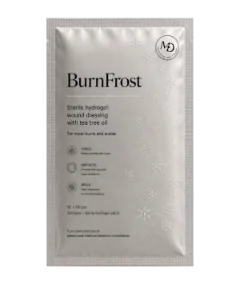
For small areas of blistered or broken sunburn, once cooled, a sterile non-stick hydrogel can protect the skin. For widespread sunburn, plain cooling and moisturising are the mainstay. BurnFrost is for the localised burn, not whole-body sun damage.
BurnFrost →- Sunburn blisters cover a large area
- There is fever, chills, dizziness, or nausea
- The skin is severely blistered or intensely painful
- A baby or young child is badly sunburnt