Burn injuries in children: what every parent should know.
Cool the burn under running water for twenty minutes and keep the child warm everywhere else. Children's skin is thinner, so burns go deeper, and you should seek medical care for anything beyond a very small, shallow burn.
Children account for a large share of household burns, usually from pulled-down cups of tea, bathwater that is too hot, touched irons and pans, and festival flames. Two things make a child's burn different: their thinner skin means the same heat causes a deeper burn, and their smaller bodies mean a spill covers a greater share of skin and loses heat faster. The first aid is identical to an adult's. The threshold for getting help is lower.
Do this, in order
Stop the burn and cool it
Remove the child from the heat and get the area under cool running water for twenty minutes. Distraction and a calm voice help them tolerate it.
Keep the rest of them warm
Cool the burn, but cover the rest of the child with a blanket; small bodies lose heat quickly and can get cold during cooling.
Remove tight clothing and items
Gently, unless stuck to the skin.
Cover and seek advice
Cling film or a clean cloth, then get anything beyond a tiny burn looked at.
What helps
- Cool for 20 minutes while keeping the child warm elsewhere
- Take children's burns more seriously than adults'
- Remove clothing unless it is stuck
- Get prompt advice for anything but a tiny burn
What harms
- Use ice on a child's burn
- Apply butter, toothpaste, or pastes
- Burst blisters
- Wait and watch a large or facial burn before seeking help
This guidance reflects current burn-care research and major clinical guidelines.
Source: Wright et al., systematic review & meta-analysis: 20 min cool running water improves burn outcomes, Australasian Emergency Care 2022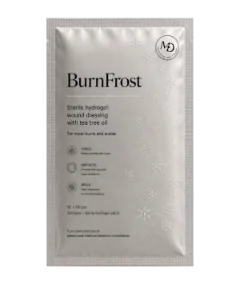
For a small, well-cooled burn on a child, a sterile non-stick hydrogel covers without sticking, which spares them a painful dressing change. BurnFrost is gentle to remove. Anything more than minor belongs with a doctor.
BurnFrost →- The burn is larger than the child's palm
- It is on the face, hands, feet, or genitals
- The child is a baby or toddler with anything but a tiny mark
- The skin is white, charred, or the child is very distressed or unwell
- The burn was from a cracker, chemical, or electricity