I burnt my hand on a hot pan. What should I do right now?
Hold the burn under cool running water for twenty minutes. Not ice. Not toothpaste. Not butter. Cool water, twenty full minutes, as soon as you can, even up to three hours later. Then cover it loosely with cling film or a clean, non-fluffy cloth.
Do this, in order
Get away from the heat
Take your hand off the pan, turn off the flame or hob. The burning does not stop the instant contact ends; trapped heat keeps damaging skin for seconds afterward.
Cool under running water
Hold the burn under cool, gently running tap water. Not freezing, not ice. Tepid-to-cool is right.
Slip off rings and watches
Burns swell, often a lot. Remove anything tight near the area before swelling makes it impossible.
Leave it bare while cooling
Do not apply anything during the twenty minutes. The water is the treatment. Everything else waits.
Cover it loosely
After cooling, lay cling film over the burn, or a clean non-fluffy cloth. Loosely. This keeps it clean and eases pain by keeping air off the exposed nerves.
Manage the pain
Paracetamol or ibuprofen, at the dose on the packet, is appropriate for the soreness that follows.
The reason this works is simple. A burn is not a single event, it is a process. Heat that has soaked into the skin keeps cooking the tissue beneath the surface for a while after the pan is gone. Twenty minutes of cool running water is the one intervention shown, repeatedly and across large reviews, to halt that process, ease pain, and reduce how deep the wound finally becomes.
This guidance reflects current burn-care research and major clinical guidelines.
Source: Griffin et al., Cool running water first aid decreases skin grafting requirements in pediatric burns: a cohort study of 2,495 children. Annals of Emergency Medicine, 2020.What helps
- Use cool or lukewarm running water
- Cool for a full 20 minutes
- Remove tight items early
- Cover loosely with cling film or clean cloth
- Keep the person warm elsewhere, so they don't get cold
What harms
- Use ice or iced water
- Apply butter, oil or ghee
- Apply toothpaste
- Burst any blisters
- Use fluffy cotton wool that sticks
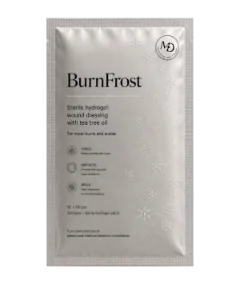
Once the twenty minutes of water are done, a sterile hydrogel dressing is a clean way to cover and keep cooling a minor burn, especially away from a tap. BurnFrost is built for exactly that step. The water comes first; the dressing carries the care forward.
BurnFrost →- The burn is bigger than the palm of the hand
- It is on the face, hands, feet, or across a joint
- The skin looks white, leathery, or charred, or feels numb
- Blisters are large, or the burn was caused by chemicals or electricity
- The person is very young, elderly, pregnant, or has diabetes