Should you put ice on a burn? The answer is no.
No. Ice and iced water make a burn worse, not better. They constrict the blood supply the skin needs to heal and can add a cold injury on top of the heat injury. Use cool running water instead, for twenty minutes.
It feels right. Skin is hot, ice is cold, the maths seems obvious. This is exactly why the ice myth is so durable, and so costly. The instinct is sound; the execution causes a second injury.
Ice causes the small blood vessels under the skin to clamp shut. That blood flow is what carries away heat and brings the repair the wound needs. Cut it off and you risk a deeper wound and a cold injury layered on the burn. Large reviews of burn first aid land in the same place: cool running tap water, not ice.
Source: Cuttle et al., review of first aid treatments for burns, cold tap water, not ice, recommended. PubMed 19269746What people reach for versus what works
What helps
- Cool running tap water, 20 minutes
- A clean cloth dampened with cool water if no tap is near
- Patience, keep the water running
What harms
- Ice cubes held to the skin
- A bag of frozen peas
- Iced water to submerge the area
- Anything from the freezer
This guidance reflects current burn-care research and major clinical guidelines.
Source: Sutton & Wright, Cooling for Thermal Burns: ice/ice-water not advised due to hypothermia and impaired perfusion. NCBI Bookshelf NBK541209There is one more quiet harm. Ice numbs the area, which feels like relief, so people hold it on longer and skip the twenty minutes of water that actually changes the outcome. The numbness is not healing. It is the wound losing its blood supply.
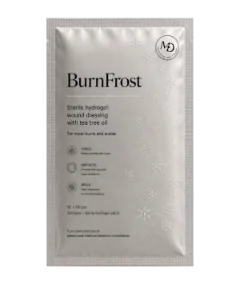
If you want cooling that is safe to leave on the skin, a hydrogel dressing cools by drawing heat away and holding moisture, without the vessel-clamping that ice causes. BurnFrost is designed to do this after the water step, not instead of it.
BurnFrost →- You have already iced a burn and the skin now looks pale, hard, or waxy
- The burn is larger than a palm, or on the face, hands or feet
- There is numbness that does not return to normal sensation
- Blistering is extensive