Burn blister: should you pop it or leave it?
Leave it alone. A burn blister is a sterile, built-in dressing protecting the raw skin beneath. Popping it opens a clean wound to infection. Cover it loosely and let it settle on its own.
A blister forms when fluid collects between the damaged top layer of skin and the living layer underneath. That fluid is clean, and the dome over it is doing a real job: keeping bacteria out while new skin forms in the moist, protected space below. It looks like something to be dealt with. It is actually the wound healing correctly.
If a blister forms
What helps
- Leave it intact
- Cover it loosely to protect from rubbing
- Wash gently with mild soap and water if it bursts on its own
- Watch for spreading redness or pus
What harms
- Pierce, drain, or pop it
- Peel away loose skin after it bursts
- Cover it tightly enough to press on it
- Pick at it as it dries
Sometimes a blister opens by accident. Do not panic, and do not peel the loose skin away, it still shelters the wound. Rinse gently with clean water, pat dry, and cover with a clean non-stick dressing. Keep an eye on it for signs of infection over the next few days.
Source: NHS, Burns and scalds: treatmentMost minor burn blisters, the kind from a splash of hot oil or a brush against a pan, settle within one to two weeks without anyone touching the blister itself. The skin underneath knits back together, the fluid is reabsorbed, and the dome eventually dries and flakes away on its own schedule.
This guidance reflects current burn-care research and major clinical guidelines.
Source: Systematic review & meta-analysis of hydrogel dressings: reduced pain and healing time vs non-hydrogel dressings. PMC6881259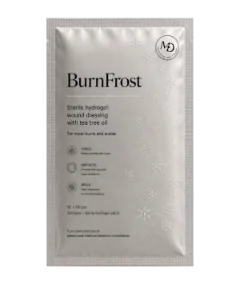
Over an intact blister, a sterile hydrogel dressing keeps the area moist and protected without sticking to the skin, which means it lifts away cleanly instead of tearing the blister open at the next change. BurnFrost is non-adherent for this reason.
BurnFrost →- The blister is larger than about two centimetres
- Several blisters cluster, or the burn covers a wide area
- The fluid turns cloudy or yellow, or the skin around it spreads red
- It is on the face, hands, feet, or genitals
- Fever or worsening pain develops after a day or two