Oil splashed on my hand while cooking. What now?
Get the oil off and the area under cool running water for at least twenty minutes. Hot oil sticks to skin and holds heat longer than water, so cooling matters even more. Do not wipe it with butter, flour, or ice.
Cooking oil burns are their own category. Oil reaches far higher temperatures than boiling water and, because it is greasy, it clings to the skin and keeps transferring heat after the splash. That is why an oil burn often looks worse an hour later than it did at the moment it happened.
Do this, in order
Move off the heat
Turn off the flame and step back so no more oil reaches you.
Flush with cool water
Hold the area under cool running water. If oil has soaked into clothing, gently remove the clothing while flushing, so it is not held against the skin.
Remove rings and bangles
Before swelling sets in.
Cover loosely
Cling film or a clean non-fluffy cloth once cooled.
What helps
- Cool under running water for a full 20 minutes
- Gently remove oil-soaked clothing while flushing
- Cover loosely after cooling
What harms
- Wipe it with butter, ghee, or flour
- Use ice to 'shock' it cool
- Pop any blisters that form
- Rub the oil off with a dry cloth
This guidance reflects current burn-care research and major clinical guidelines.
Source: Wright et al., systematic review & meta-analysis: 20 min cool running water improves burn outcomes, Australasian Emergency Care 2022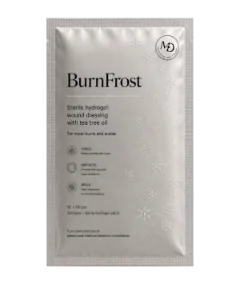
Once cooled, a sterile non-stick hydrogel keeps an oil burn covered without the dressing bonding to the raw skin. BurnFrost is designed to lift away cleanly.
BurnFrost →- The burn is bigger than the palm of the hand
- It is deep, white, or has spreading redness
- It is on the face, hands, or feet
- Blisters are large or the area was widely splashed