I touched a hot iron / tava / pan. A small contact burn, what now?
Cool it under running water for twenty minutes, even though it is small. A brief touch against a hot iron, tava, or pan still leaves heat in the skin. Cool it properly and leave any blister alone.
Contact burns from hot metal, a clothes iron, a tava, the side of a pan, are usually small and sharply defined: a stripe or a patch exactly where the skin met the metal. Because they are small, people tend to shake the hand and carry on. The skin underneath has still taken real heat, and twenty minutes of cooling changes how it heals.
Do this, in order
Pull away and cool
Off the metal and straight under cool running water.
Remove a ring if it is near
Even a small burn swells.
Leave any blister intact
It is protecting the skin.
Cover loosely
A clean plaster or non-stick dressing once cooled.
What helps
- Cool even small contact burns for the full time
- Leave blisters intact
- Cover with a clean, non-stick dressing
What harms
- Shrug it off without cooling
- Apply ice or toothpaste
- Pop the blister
- Keep using the burnt hand against more heat
This guidance reflects current burn-care research and major clinical guidelines.
Source: Wright et al., systematic review & meta-analysis: 20 min cool running water improves burn outcomes, Australasian Emergency Care 2022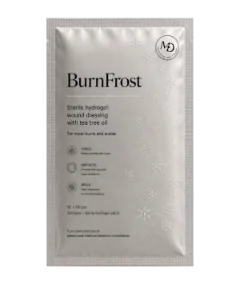
A small, well-placed hydrogel dressing covers a contact burn on a finger or the back of the hand without sticking. BurnFrost handles the awkward small burns that plasters do not cool.
BurnFrost →- The burn is deep, white, or larger than expected
- It is on the fingertips, palm, or crosses a joint
- A blister is large or the skin is broken
- It is a child's hand